
Stop Asking AI to Fold Laundry
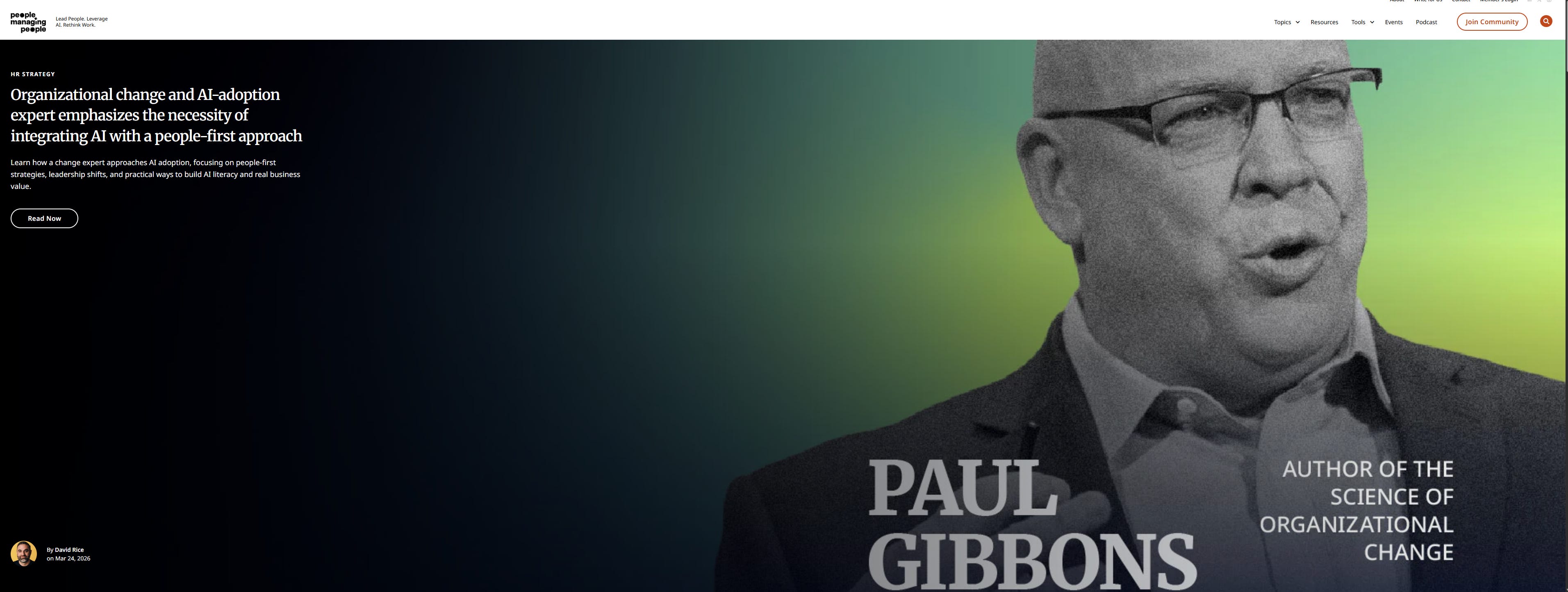
In a recent interview with People Managing People, I argued that most firms are using AI to shave time off old work instead of building the new capabilities that actually matter.

When the AI boom hit two years ago, I read an article by Deloitte - it said, “AI adoption should be focused on the highest ROI.”
It is the sort of comment, from an authoritative source, that passes as wisdom.
I thought then, in 2024, what a silly thing to suggest.
It was early, and Deloitte can be forgiven, but is that really the place to start, because the highest ROI is:
likely among the most complex
of a still unproven technology
in a workforce that aren’t ready
And they still aren’t.
And that is why management BS circulates - on the face of it, the remark sounds obvious - unless you think it through, then it is dumb.
Most businesses are too focused on productivity gains from AI.
Stop. This completely misses the point.
Yes, AI can help with speed, efficiency, and cost. Fine. Useful. Necessary, even.
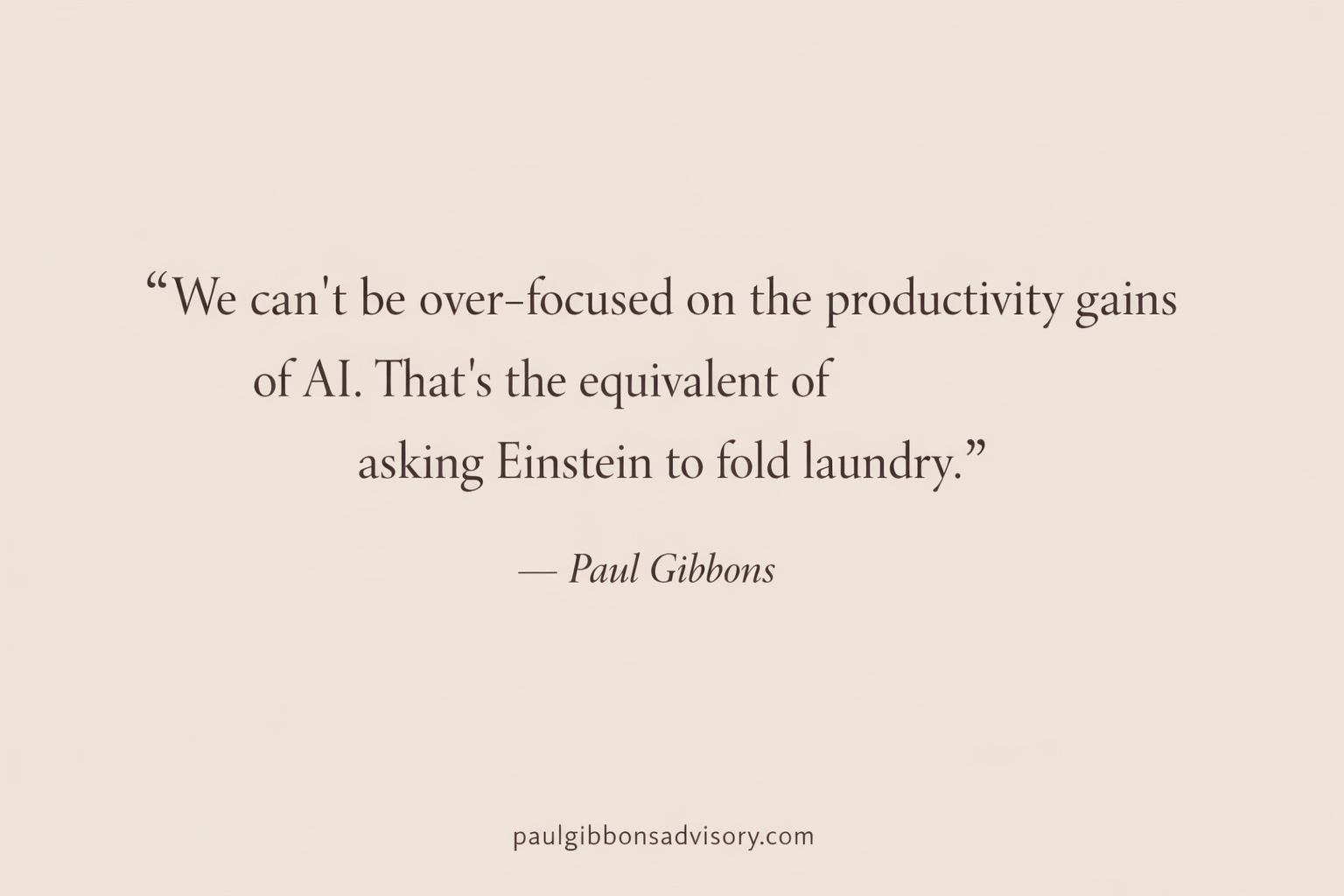
But if all you do is make yesterday’s work slightly cheaper, you are asking Einstein to fold laundry.
You bring in an alien intelligence and try to plug and play it into a human team. There aren’t AI shaped holes in human teams.
It is vastly better at some things, but ridiculously worse at others.
The serious question is not: how do we save a few hours?
It is: what new capability does this create?
Can your people solve problems they could not solve before?
Can leaders make better decisions, faster?
Can teams redesign work, not just accelerate drudgery?
Can the organization become more intelligent?
That is where the real value is.
I talked about some of this in a recent interview with People Managing People. The piece touches on people-first AI adoption, why old leadership models are too static for this moment, and why AI literacy has to be broader than prompt tricks.
But the heart of it is simpler than that: most organizations are still treating AI as an efficiency tool when they should be treating it as a capability shift.
Again…
NOT - how can we do things faster?
NOT - how can we automate crappy workflows?
BUT - what capabilities does AI make available that were not before?
AND - what can we imagine is possible if we link this other intelligence to our team’s?
The firms that win will not just do the same work faster.
They will learn faster, decide better, and build forms of organizational intelligence that were not previously possible.
That is the real prize.